Why Is My Washing Machine Leaking From the Bottom? 8 Culprits
QUICK ANSWER: Water under a washing machine comes from one of several parts: a cracked or loose drain or fill hose, a worn door boot on a front-loader, a failed tub seal, a cracked outer tub, an overflowing detergent dispenser, oversudsing from too much or non-HE soap, a leaking pump, or a house drain that can't keep up. Note whether the leak occurs on fill, during the wash, or during spin and drain, then check the easy causes (hoses, soap amount, and the machine level) before assuming an internal part has failed.
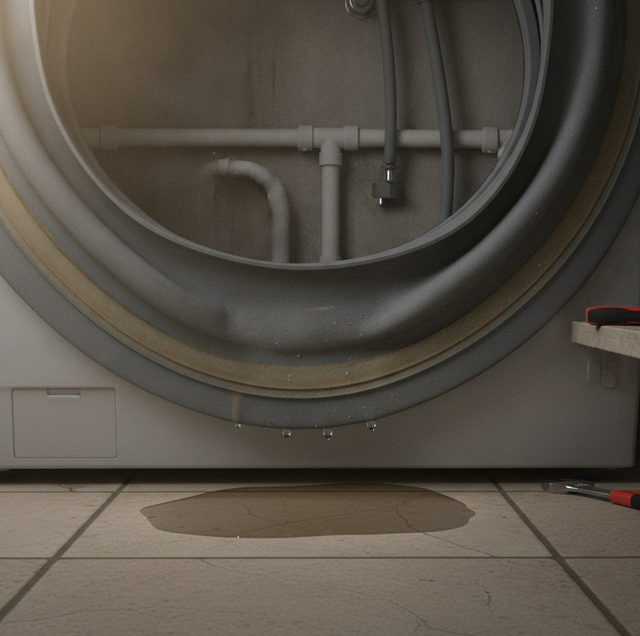
Finding a puddle under the washer is one of those problems that looks worse than it sometimes is. A cracked drain hose and a failed tub seal both leave water on the floor, but one is a ten-minute fix with a screwdriver, and the other means the machine has to come apart. The good news is that the water itself is a clue. Where it collects and, more usefully, when it shows up during the cycle point straight at the part that lets it out.
Water Follows the Cycle, So Watch the Timing
Think of the wash cycle as three separate plumbing events. First, the machine fills with clean water. Then it agitates or tumbles that water through the clothes. Finally, it pumps the water out and spins. Each of those stages puts pressure on a different set of parts, so the moment water appears tells you which stage failed and, by extension, which component to look at.
A leak that shows up only while the tub is filling almost always comes from the supply side: the fill hoses running from the wall valves, the connections at either end, or the inlet valve on the machine itself. If the floor stays dry until the wash gets going and water starts creeping out near the door or the front base, the problem lies with the parts that hold water during the wash, the door boot on a front-loader, the tub, or a dispenser that is overflowing. And if everything is fine until the machine drains and spins, when water moves fast and under real force, you are looking at the drain hose, the pump, or the tub seal.
Getting in the habit of watching one full cycle before you touch anything saves a lot of guesswork. You can usually pin the leak to a stage in a single load.
The Usual Suspects, From Easy to Involved
Hoses and clamps
The most common and most fixable cause is a hose. A washer has a fill hose (sometimes two, hot and cold) bringing water in and a drain hose carrying it out. Rubber fill hoses grow brittle and can split, especially the reinforced type, after years of pressure. The drain hose can crack where it flexes or slip loose at its clamp. Hard water, which many homes deal with, leaves scale that stiffens rubber and works clamps loose over time. A hose or a clamp is homeowner territory: shut the water off, look for cracks or dampness, and snug or swap the part.
The door boot on front-loaders
Front-loaders seal the door against the tub with a flexible rubber gasket, the door boot. Its folds are a trap for coins, hairpins, lint, and moisture, and over the years, the rubber tears or the trapped debris holds a load of water that seeps out the bottom of the door. A boot leak shows during the wash, when the drum is full and turning, and it usually leaves water at the front base rather than underneath the center.
Detergent and oversudsing
Too much soap, or the wrong soap, makes suds that the machine cannot contain. This one fools people by mimicking a hardware failure. Excess foam overflows the tub and dispenser and runs out the bottom.
The tub seal and bearing
Behind the drum sits a shaft that spins it, and a seal keeps water from following that shaft into the bearing. When the seal wears out, water gets past it during high-speed spin and drips from the underside center of the machine. This is an internal repair, not a homeowner job, and it often announces itself with noise before the leak ever appears.
A cracked outer tub
The outer tub is the sealed vessel that holds the wash water; the drum spins inside it. A crack here, from age, a hard object, or stress on an unlevel machine, lets water out at whatever point the crack sits. Tub replacement is a major repair, and a judgment call about the machine's age.
The pump and its seal
The drain pump pushes water out during the drain phase. Pump housings crack, impellers wear, and the seal around the pump shaft fails, any of which drips during draining. A pump sits low in the machine and generally requires a technician to reach and replace it.
Internal hoses
Beyond the fill and drain hoses you can see, several hoses route water between components inside the cabinet. One of these may come loose or split internally, and because the water can travel along the frame before it drips, the puddle may show up nowhere near the actual break. Diagnosing an internal hose usually means opening the cabinet.
The house drain, not the washer
Sometimes the machine is fine, and the plumbing is not. That case gets its own FAQ below, but keep it on the list, because chasing a washer part when the real trouble is the standpipe wastes an afternoon.
What You Can Safely Check Yourself
Before any of this, two rules. Unplug the machine, and shut off the water valves at the wall. Standing water and a plugged-in appliance are a genuine shock hazard, and there is no reason to work around live electricity when the outlet is right there.
With the power and water off, you can:
Inspect the hoses and clamps- Run your hand along the fill and drain hoses looking for cracks, bulges, or damp spots, and check that every clamp is tight and every connection is seated. This alone resolves a large share of leaks.
Check what you are loading and how much soap you use- A washer stuffed past its capacity throws water where it does not belong, and too much detergent, or a non-HE detergent in a high-efficiency machine, oversuds and overflows. Try a load with a smaller amount of the correct soap.
Clean the door boot- On a front-loader, peel back the rubber fold and clear out the coins, lint, and grime. Wipe it dry and look for tears while you are in there.
Level the machine- Rock the washer gently. If it moves, adjust the feet until it sits solid. A level machine keeps water where the seals expect it and takes stress off the tub.
If the leak survives all four of those, or if it traces back to the tub seal, the pump, the outer tub, or a hose you cannot see, that is the line where it becomes a service call. Those repairs require opening the cabinet, the right parts, and a botched reassembly that leaks worse than what you started with.
Telling an Easy Fix From a Real Repair
The whole diagnosis really comes down to sorting the cheap, fast problems from the ones that mean labor. A hose, a clamp, a boot full of debris, a soap-and-loading habit, those are quick and often free to correct. A tub seal, a bearing, a pump, a cracked tub, an internal hose, those are inside the machine and require a technician.
The tell is usually the timing plus the location. Leaks tied to fill, to a visible external hose, or to how much soap goes in are on the easy end. Leaks that appear from the center underside during spin, or that come with grinding or knocking, sit at the repair end. When you have ruled out the simple causes and the water keeps coming, calling a pro early beats running load after load onto a floor that does not need the water.
Frequently Asked Questions
Timing is the fastest filter you have, and you can sharpen it further by noting the water temperature. A leak that appears only during a HOT fill, specifically at the hot inlet valve or its solenoid, because the cold side stays dry during that fill. That single observation narrows the problem faster than just knowing it leaks somewhere during fill, since it tells you which of the two inlet paths failed. Watch a full cold-only cycle to confirm: if it stays dry on cold but weeps on hot, the hot valve is the part to replace.
Yes, and it is a common false alarm. Excess detergent, or a regular non-HE detergent used in a high-efficiency washer, generates far more suds than the tub was designed to hold. Those suds build up, overflow the tub and the dispenser, and run out the bottom of the machine, so it reads as a leak when it is really oversudsing. High-efficiency machines use much less water, so foam has nowhere to dissipate. The fix is switching to an HE detergent and measuring a smaller dose rather than eyeballing the cap.
The door boot is the flexible rubber gasket that seals the door against the tub on a front-loading washer. Its accordion folds sit right at the opening, so they collect coins, lint, hair, and moisture, and over time, that trapped debris breeds mildew, and the rubber itself tears or perishes. Once the seal is compromised, water escapes near the bottom of the door during the wash cycle, when the drum is full and tumbling. Wiping the fold dry after loads and fishing out debris extends its life considerably.
A leak from the dead center underside during the high-speed spin usually means the tub seal and bearing have failed and are letting water slip past the drum shaft. The sound tells the two apart from a pump leak: a bearing rumble grows louder as the spin speeds up, while a pump leak holds a steady whine or drip no matter how fast the drum turns. So how the noise changes with speed separates a failing bearing from a failing pump before the cabinet is even opened. Either way, it is an internal repair that needs a technician rather than a hose swap.
It can. A washer that is not level rocks during agitation and spin, and that motion can slosh water past seals and hose connections that would otherwise hold fine. The rocking also puts uneven stress on the tub over time, which can crack it. Because leveling the feet takes two minutes and no parts, it is worth doing as a first check before you assume a component has failed, especially if the leak is intermittent or seems tied to how hard the machine is shaking.
Quite possibly. If the standpipe or the house drain line cannot swallow the water as fast as the pump sends it, the water backs up and overflows around the drain hose where it enters the pipe, then pools under the machine. It looks exactly like a washer leak, but the appliance is working perfectly; the drain is the bottleneck. A partial clog in the standpipe, often caused by lint and detergent buildup, is a common culprit. If the puddle appears only during the drain phase and grows near the standpipe, suspect the plumbing before the washer.
Book an appliance repair — get an accurate diagnosis before a small leak turns into water damage. Freedom Appliance of Tampa Bay serves Tampa Bay and Riverview. Call (813) 302-7672 to schedule a repair.