
Why Is My Dishwasher Not Draining? 7 Culprits to Check First
QUICK ANSWER: Standing water in the bottom of the tub after a full cycle means water is not leaving the machine. The drain path is either blocked (filter, hose, disposal, or air gap) or the drain pump is not pushing water out. Most blockages you can clear yourself; a dead pump is a repair.
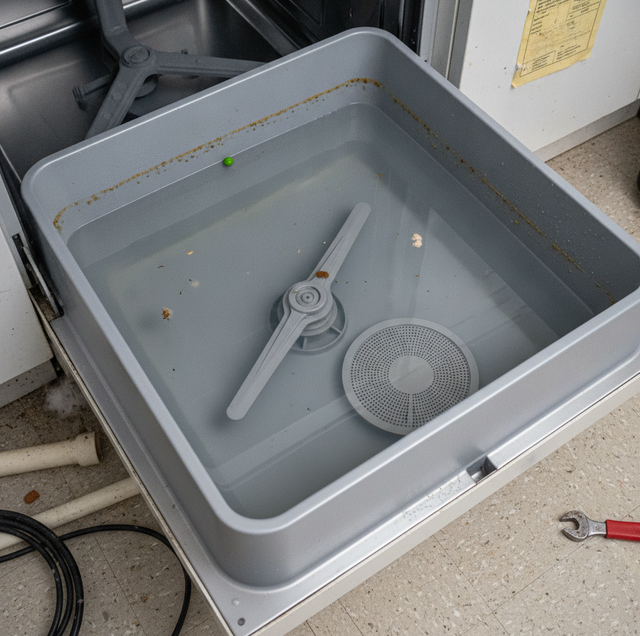
You open the door expecting clean, dry dishes and instead find a shallow pool of gray water sitting over the filter, maybe with bits of food floating in it. It is one of the most common appliance complaints, and it almost always traces back to a small number of causes. Before you call anyone, it helps to understand what is actually supposed to happen at the end of a cycle, because that tells you exactly where to look.
What Is Supposed to Happen at the End of a Cycle
A dishwasher does not simply let water fall out the bottom. At the drain step, a dedicated drain pump switches on and pushes the dirty water up and out through a hose that usually loops high under your sink before dropping down to a garbage disposal or a dedicated drain fitting. That upward path is deliberate. It behaves like a sink trap working in reverse: the high loop or air gap creates a break so dirty water from the sink cannot siphon back down into your clean dishes.
For that to work, three things have to be true. The water has to be able to reach the pump (no clog at the filter). The pump has to be able to move it (a working motor and a free impeller). And the water has to have somewhere to go (a clear hose, a clear disposal inlet, a clear air gap). Standing water means one of those three links is broken. The trick is figuring out which one, and the good news is that the most common culprit is also the easiest to fix.
The Blockage Culprits, From Most Common to Least
The filter- At the bottom of the tub, under the lower spray arm, sits a removable filter that catches food particles, so they do not recirculate onto your dishes. Over months of use, that filter and the small well beneath it pack with a paste of grease, softened food, and grit. Once it clogs, water cannot drain down to the pump fast enough, and you get standing water. This is the single most frequent cause, and it is entirely user-serviceable.
The drain hose- The corrugated hose that carries water out can kink where it bends behind or under the cabinet, especially if the dishwasher was recently pushed back into place or something heavy was set on it in the sink base. A kink pinches the path shut. The same hose can also collect a slug of grease and debris internally over the years of use.
The garbage disposal- If your dishwasher drains into a disposal, that connection is a frequent failure point. Run the disposal first, because a plug of food packed in its grinding chamber blocks the dishwasher's inlet. And if the disposal is brand new, there is a specific trap described below that stops draining cold.
The air gap- If your sink has a small chrome cylinder poking up on the deck, that is the air gap, and it can clog with debris and choke the drain line. A telltale sign is water bubbling or spurting around that cap during the draining step.
The pump and its valves- If the path is clear but water still will not leave, the problem moves into the machine itself: a failed drain pump motor, a jammed impeller, a stuck check valve that is supposed to let water out but not back in, or a faulty drain solenoid. These are the least common causes and the ones that call for a technician.
Telling a Clog Apart From a Dead Pump
This is the distinction that decides whether you are cleaning something or replacing something, so it is worth slowing down for.
A clog is usually shared plumbing. The dishwasher, the disposal, and the sink all empty through the same connections, so if the kitchen sink next to the dishwasher is also draining slowly or backing up, the obstruction is downstream and affects everything. Clear that, and the dishwasher drains again.
A pump failure is isolated to the machine. If the sink drains perfectly but the dishwasher is full, listen to the drain step. A drain pump that hums or buzzes without any water actually leaving is a pump that is energized but not moving water, which points to a jammed impeller or a burned-out pump. Silence at the drain step can mean the pump is not getting power at all, often a control or solenoid issue. Neither is a cleaning job.
What You Can Safely Do Yourself
A few checks are safe for any homeowner and resolve most standing-water cases:
Run and, if needed, clear the garbage disposal- A quick run flushes a food plug that may be choking the shared inlet.
Remove and rinse the filter- Twist it out, rinse it under the tap until the mesh runs clean, and wipe out the well underneath it. This alone fixes a large share of drain complaints.
Check the drain hose for a kink- Look where it exits the machine and where it loops under the sink, and gently straighten any pinch you find.
Clean the air gap- Pop the cap, lift out the cover, and clear any gunk from the chamber.
Where the Line Is: Leave These to a Technician
Anything past the sump gets into moving parts and electrical connections. Reaching the drain pump or its impeller means the water has to be bailed out, the power disconnected, and the sump cover removed, and there is often broken glass or sharp grit down there. A stuck check valve, a failed solenoid, and a control board that is not sending the drain signal all require testing and parts. Because these involve both electricity and standing water, they are the point to bring in a professional rather than improvise.
One safety note that applies to every internal check: unplug the dishwasher or switch off its breaker before you put a hand anywhere near the sump or pump. Standing water and a stray glass shard are a bad combination, and the pump can cycle unexpectedly if it still has power.
Frequently Asked Questions
It is a removable cylindrical filter that sits at the bottom of the tub, directly under the lower spray arm, and usually twists a quarter turn to lift out. The food sludge that collects there is the most common cause of a dishwasher not draining. To clean it, lift it out, rinse it under a running tap until the mesh is clear, and scoop out the small well beneath it where grit settles before dropping the filter back in and twisting it to lock.
A brand-new disposal ships with a solid knockout plug sealing the dishwasher inlet on its side, so it is watertight in the box. That plug is meant to be punched out during installation before the dishwasher hose is connected. If the installer skipped that step, the dishwasher's drain hose is connected to a sealed port with nowhere for the water to go, so it simply backs up into the tub. It is a classic symptom right after a disposal swap, and clearing it means knocking out that plug.
The small chrome cylinder that pokes up through the sink deck near the faucet is the air gap. Its job is to create a physical break in the drain line so dirty sink water can never siphon backward into the dishwasher. Because water passes through it, it collects debris and can clog, causing water to bubble or spit around the cap during the drain step. Cleaning it means lifting off the chrome cap and then removing the inner plastic cover underneath it to clear the debris packed in there, a second cover that many people miss and leave in place, so the clog never actually comes out.
There is a quick isolation step before you assume the pump. Run the garbage disposal empty for a few seconds, then send the dishwasher through a drain or cancel cycle again. If it clears, the fault was on the disposal or air-gap side of the connection, not the pump at all. If the sink drains fine and you still hear the pump hum or buzz at the drain step with no water leaving, then the impeller is jammed, or the pump has burned out, which is a repair rather than a cleaning task.
The drain hose is intentionally routed up to a high loop, fastened near the underside of the countertop, before it drops to the disposal or drain. That high point prevents wastewater from siphoning back into the clean tub, the same purpose an air gap serves. If that loop has slipped down out of its clip, or the hose has kinked, the water cannot climb over the hump and the draining stalls. Re-securing the hose back up at that high point can restore normal draining on its own.
Yes. A chip from a broken glass or a hard fruit pit can travel down to the sump and lodge in the drain pump impeller, wedging the blades so the motor cannot spin them. That is often why you hear a hum with no water movement. Because getting the fragment out means disconnecting power, bailing the water, and removing the sump cover with sharp debris in play, this retrieval is usually left to a technician rather than attempted by hand.
Book a diagnostic visit — get standing water and a stalled drain sorted the same day. Freedom Appliance of Tampa Bay serves Tampa Bay and Riverview. Call (813) 302-7672 to schedule a repair.