
Why Does Frost Keep Building Up in My Freezer? 6 Real Causes
QUICK ANSWER: A thin, even coating of frost inside a freezer is normal. Heavy or fast-returning frost means one of two things: humid air is sneaking in past a bad door seal and freezing on contact, or, on a frost-free unit, the automatic defrost system has failed, and the cooling coil is icing over. Where the ice forms tells you which. A solid sheet on the back panel points at the defrost system; frost concentrated near the door points at the gasket or seal.
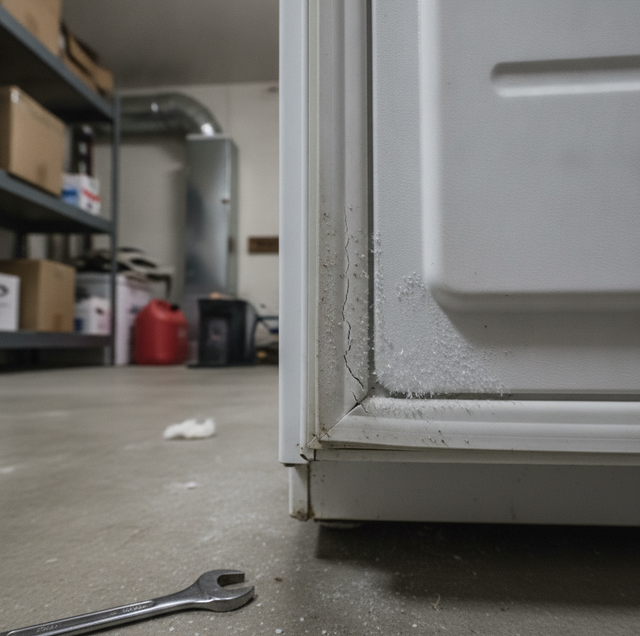
Open the freezer, and there it is again: a crust of white spreading over the shelves, the walls, maybe a bag of peas welded to the floor. You scraped it two weeks ago. Now it's back. Some freezer frost is ordinary and harmless, but frost that keeps returning, or a layer thick enough to notice, is the appliance telling you something specific. The cause is almost always one of a short list, and each one leaves a different signature. Reading that signature is what turns "the freezer keeps frosting" into a fix you can actually aim at.
First, Know What Normal Frost Looks Like
Every time the door opens, a small amount of room air rolls into the freezer. That air carries moisture. When it hits surfaces sitting well below freezing, the moisture condenses into tiny ice crystals. A light, powdery, even dusting on the walls and shelves is the result, and it means the freezer is doing its job. On a frost-free unit, the appliance quietly melts that away on its own schedule, so you may rarely see any at all.
The frost that signals a problem is different in three ways: it comes back fast after you clear it, it builds into a solid or ridged layer rather than a fine dust, and it tends to concentrate in one spot instead of coating everything evenly. When frost stops being a thin film and starts being a structure, the freezer has crossed from normal into a fault you can trace.
Cause One: A Worn Door Gasket or a Door That Won't Seal
The rubber gasket running around the freezer door is the appliance's weather-stripping. When it is soft, clean, and makes full contact, it holds a tight seal, and warm room air stays out. When it hardens, tears, flattens at a corner, or gets gummed up with spilled food, it leaves a gap. Through that gap, warm, humid air flows in continuously, not just when the door opens, and every bit of moisture in it freezes onto the nearest surface.
The thing is location. Gasket-driven frost is heaviest near the door opening and along whichever edge of the seal has failed. You may also notice the freezer running longer than it used to, or the outside of the door feeling cool and damp where the leak sits. In a humid climate, the effect is worse because the incoming air is carrying far more water for the freezer to convert into ice.
A door that simply won't close all the way does the same thing faster. An overpacked freezer is the usual culprit: a box shoved too far back, a bag draped over the edge, or a drawer that no longer slides flush all hold the door open a crack. That thin gap is enough to fog the whole compartment with ice within a day or two.
Cause Two: The Defrost System Has Failed
This one applies to frost-free freezers, which are nearly every fridge-freezer combo made in recent decades. A frost-free unit still forms frost, but it hides a system that melts it away on a cycle, so you never see it. Behind the back panel of the freezer sits the evaporator coil, the part that actually gets cold. Cold air is blown off that coil into the compartment. Frost naturally collects on the coil as it works, and several times a day, a defrost system briefly warms it to melt that frost, which then drains away as water.
Three parts make that happen, and when anyone quits, the melting stops. The defrost heater is a rod or element beside the coil that supplies the warmth; it is the most common failure. The defrost thermostat is a small sensor that lets the heater run only when the coil is cold enough to need it, and shuts it off before it warms your food; a failed one can leave the heater dead. The defrost timer, or on newer units, the control board, is the clock that triggers the whole cycle on schedule; when it stops advancing, defrost never starts.
Whichever part failed, the outcome looks the same from inside. Frost is no longer melted off the coil, so it piles up on the back panel of the freezer where the coil lives. The build-up thickens into a solid white or clear sheet. As it grows, it chokes the airflow the fan needs to push cold air around, so the freezer cools weakly and the fresh-food fridge below it starts to warm up, sometimes noticeably. A solid sheet of ice on the back wall, plus a fridge that isn't cold enough, is the classic fingerprint of a defrost failure.
Cause Three: A Blocked Defrost Drain
When the defrost cycle melts frost off the coil, that water has to go somewhere. It runs down to a small drain channel at the base of the freezer and out to a pan underneath the appliance. If that drain clogs with food debris or with ice from a previous melt, the water has nowhere to go. It refreezes right there and builds a slab of ice across the freezer floor, often creeping out under the bottom drawer. Frost that forms at the bottom of the compartment, or water that pools and then freezes there, points to the drain rather than the coil or the seal.
Cause Four: Settings and Habits That Feed Frost
Two everyday things quietly make frost worse. The first is a temperature setting turned colder than it needs to be. A freezer set far below the roughly 0 degrees it should hold doesn't preserve food any better, but the extra-cold surfaces pull moisture out of the air more aggressively, so frost forms faster. Nudging the dial back toward the normal range often slows a nuisance frost problem on its own.
The second is airflow. Every freezer has vents where cold air enters, usually on the back wall or ceiling. Pack food tightly against those vents, and the air can't circulate. Cold pools in some spots, and the appliance runs harder to compensate, which drives more frost. Leaving a finger's width of clearance around the vents keeps air moving and frost even.
Frequent, lingering door openings feed the problem, too. Think of the freezer like a cold plunge pool with the lid off: every second the lid is up, warm room air pours in and the water it carries turns to ice inside. Grab what you need and close the door, and the freezer has far less moisture to freeze.
ReadinG the Ice Like a Map
Because each cause leaves frost in a different place, where the ice sits is the fastest first diagnosis. Light, even frost coating everything is normal. A solid sheet concentrated on the back panel, paired with weak cooling, is a defrost-system failure. Frost heaviest around the door edge, with the seal area cool and damp, is a gasket or seal problem. A slab across the floor or under the bottom drawer is a clogged defrost drain. Naming the pattern tells you whether you are looking at a five-minute check or a component that needs a technician.
What You Can Do, and What to Leave to a Tech
A few checks are safe and worthwhile on your own. Run the dollar-bill test on the gasket to judge the seal. Clear food away from the vents and off the door line so nothing holds it ajar. Ease an over-cold setting back toward normal. If ice has already built up, a full manual defrost clears it: empty the freezer, unplug the appliance, prop the door open, lay down towels, and let everything melt at room temperature. That resets the compartment, but if the frost returns on the same schedule, the underlying cause remains.
Where it gets past a homeowner is the defrost system. Testing a defrost heater, thermostat, timer, or control board and swapping the failed one means pulling the back panel, reading the parts with a meter, and knowing which reading is bad. That is diagnostic work for a technician, and it is worth doing right rather than replacing parts by guesswork. The same goes for anything touching the sealed refrigeration system: the refrigerant and the closed loop it runs in are not homeowner-serviceable and are handled only by a qualified pro.
Two safety notes carry through all of it. Always unplug the freezer before any manual defrost or before poking around inside, so a fan or heater can't cycle on while your hands are near it. And never open the sealed system yourself. Getting the diagnosis right is what keeps a frost problem from turning into a warm freezer and a load of thawed food.
Frequently Asked Questions
A dusting is harmless, but frost is an insulator, so once it thickens on the coil or the walls, it slows heat transfer, the freezer runs longer to hold temperature, and the energy use creeps up. On a manual-defrost or chest freezer, the common guideline is to defrost before the buildup reaches roughly a quarter to half an inch, because past that, the ice starts costing you efficiency and usable space. On a frost-free unit, you should not reach that point at all, and if you do, the defrost system or the door seal is the reason, not normal use. So the practical line is less about how it looks and more about thickness and whether it keeps coming back.
Use the dollar-bill test. Close the freezer door on a dollar bill so half sticks out, then tug it. If it slides out with almost no drag, the seal at that spot is weak. Repeat every few inches all the way around the door; a gasket can seal fine on one edge and fail at a single corner. Also, wipe the gasket down, since dried spills and crumbs break the seal as surely as a tear does, and a simple cleaning sometimes fixes it. Replacing a gasket is doable for a confident homeowner. The new seal has to match your exact model and often needs warming, so it lies flat. Getting it seated evenly around every corner is fiddlier than it looks, so many people have it done to be sure the seal is truly tight.
Both leave you with poor cooling and ice, so they get confused. A defrost failure shows a solid sheet of frost across the evaporator behind the back panel, while the rest of the loop looks normal. If you unplug the unit for a full day to melt it, the freezer cools fine again for a while before it refreezes. A low-refrigerant or sealed-system fault behaves differently: you tend to see frost or sweating on only part of the coil or on the copper suction line, uneven cold spots, and it does not bounce back after a manual defrost, because the problem is the refrigerant charge, not melted ice. The sealed system is closed, pressurized, and regulated, so confirming and repairing that side is a certified technician's job, while a defrost part is a more contained repair.
That points to a clogged defrost drain, a different fault from a bad seal or a dead heater. When the defrost cycle melts frost off the coil, the water is supposed to run down a small drain tube to a pan near the compressor. If food debris or ice plugs that tube, the meltwater has nowhere to go, so it refreezes into a flat sheet on the freezer floor, and once it overflows it drips into the fresh-food section, where you find water under the crisper drawers or a thin skin of ice. Clearing the drain, often by flushing the tube with warm water, is the fix, and it is worth catching early because standing water invites odor and mold below.
It can, in ways people do not expect. Setting the freezer far colder than it needs to be does not preserve food any better; it widens the temperature gap that pulls moisture out of any air leaking in and freezes it faster, so an overly low setting can cause more frost. Around zero degrees is the usual target, and pushing well below that mostly adds ice and energy use. Room heat matters too: a spare freezer in a hot garage runs its compressor harder and gives its defrost cycle more heat and moisture to fight, so a small seal gap or a marginal defrost part shows up as frost sooner there than it would on a unit in a cool, dry room.
You can clear it, and a full manual defrost is the right way to do that: unplug the unit, empty it, prop the door, and let the ice melt onto towels rather than chipping at it with a tool, which risks puncturing the coil or the liner. But scraping only treats the symptom. If frost returns on the same timeline, the cause, a failed seal, a dead defrost part, or a clogged drain, is still in place and will keep rebuilding the ice. Worse, on a defrost failure, the growing sheet chokes airflow and slowly warms the fridge below, so ignoring it can cost you food. Clearing the ice buys time; finding out why it came back is what actually solves it.
Book an in-home appliance diagnosis — get the real cause fixed so the frost stops coming back for good. Freedom Appliance of Tampa Bay serves Tampa Bay and Riverview. Call (813) 302-7672 to schedule a repair.