Water Pooling Under Your Fridge? The Usual Causes
QUICK ANSWER: Water pooling under a refrigerator usually comes from one of three things: a clogged defrost drain (the most common), which backs up melted frost until it overflows; a leaking water supply line to the ice maker or dispenser; or a cracked or overflowing defrost drain pan underneath. Less often it's a door seal letting in humid air or an unlevel fridge. Find the source — a clog you can often clear, a leaking line needs the valve shut and a repair.
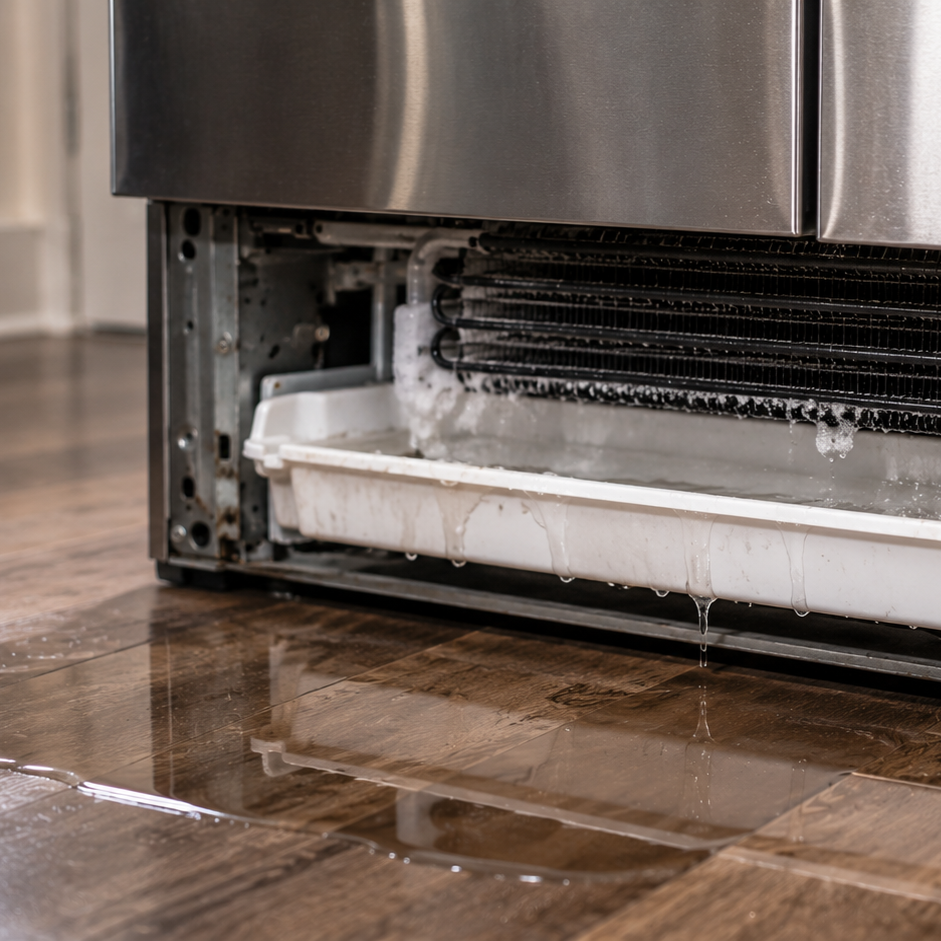
Finding a puddle under the refrigerator is one of those problems that feels mysterious until you know the three or four places water comes from. A fridge handles water constantly — melting frost, an ice maker, a dispenser — and a leak means one of those paths has failed. The good news is that the causes are on a short list, and you can often fix a couple of them yourself. Here is how to track it down.
Where Refrigerator Water Comes From
A refrigerator deals with water in two main ways. First, it periodically defrosts: the freezer's cooling coils build up frost, the unit melts it on a cycle, and that water is supposed to run down a small defrost drain into a pan underneath, where it evaporates. Second, if you have an ice maker or water dispenser, a water supply line feeds them. A puddle on the floor almost always means one of those systems is failing — the defrost water isn't draining, or the supply line is leaking. Knowing which tells you whether it's a quick fix or a repair.
The Common Causes
A Clogged Defrost Drain
This is the most common cause. The defrost drain is a small tube that carries melted frost from the freezer down to the drain pan. Over time, it clogs with ice, food particles, or debris, and when it backs up, the defrost water has nowhere to go — so it overflows, often pooling inside the fridge or freezer and then running onto the floor. A telltale sign is water or ice collecting in the bottom of the freezer or under the crisper drawers. Clearing the drain often solves it.
A Leaking Water Supply Line
If your fridge has an ice maker or water dispenser, the supply line, its connections, or the inlet valve can leak. A cracked line, a loose fitting, or a failing valve drips water that pools under or behind the refrigerator. This one tends to produce clean water and can leak even when the defrost system is fine. Because it's connected to your home's water, a leaking line should be addressed promptly — shut off the supply valve to stop it.
A Cracked or Overflowing Drain Pan
The pan under the fridge that catches defrost water can crack or overflow if there's more water than usual (often due to a defrost or upstream drainage problem). Either way, water ends up on the floor. The pan is usually accessible from the front or back at the bottom of the unit.
Less Common: Door Seals or an Unlevel Fridge
A worn or dirty door gasket lets warm, humid air in, which makes the unit work harder and produce excess condensation and frost — more for the drain to handle. And a refrigerator that isn't level can keep the defrost system from draining properly. These are secondary causes worth checking if the obvious ones come up empty.
| What you notice | Likely cause | What to do |
|---|---|---|
| Ice/water in freezer or under drawers | Clogged defrost drain | Clear the drain tube |
| Clean water near the water/ice side | Leaking supply line or valve | Shut off supply; repair |
| Water at the very bottom front/back | Cracked or overflowing drain pan | Inspect/replace the pan |
| Excess frost and condensation | Worn door seal | Clean or replace the gasket |
| Drain won't clear, fridge rocks | Unlevel refrigerator | Level the unit |
What to Do
Start by figuring out which system is at fault. If you see ice or water building up inside the freezer or under the crisper drawers, suspect the defrost drain — clearing that tube (often by flushing it or gently removing the clog) is a common DIY fix. If the water is clean and near the water/ice side or behind the unit, suspect the supply line; shut off the water supply valve to the fridge to stop the leak before anything else. Check the drain pan at the bottom for cracks or overflow, and pull the fridge out to look behind it for a wet line or fitting.
If clearing the defrost drain doesn't hold, the supply line or inlet valve is leaking, or a component like the defrost system has failed, that's the point to bring in an appliance pro. Don't let it linger — water under a refrigerator can warp and damage flooring and feed mold, and a leaking water line can get worse. Catching the source early keeps a puddle from becoming floor damage.
Frequently Asked Questions
Most often, water under a refrigerator is caused by a clogged defrost drain that backs up melted frost until it overflows onto the floor. Other common causes include a leaking water supply line to the ice maker or dispenser, a cracked or overflowing defrost drain pan, worn door seals, or an unlevel refrigerator. Identifying the source of the leak helps determine whether it's a simple fix or a repair.
Look at where the water appears and whether it's clean. Ice or water collecting inside the freezer or beneath the crisper drawers usually indicates a clogged defrost drain. Clean water pooling behind the refrigerator or near the ice maker and water dispenser often points to a leaking water supply line or inlet valve. Frost buildup typically accompanies a clogged drain, while a supply-line leak usually produces only clean water.
Often, yes. The defrost drain is a small tube that carries melted frost to the drain pan, and it can usually be cleared by flushing it with warm water or gently removing any blockage caused by ice or debris. It's one of the more DIY-friendly refrigerator repairs. If the drain keeps clogging or water continues to appear afterward, the defrost system may require professional service.
Not usually, but it shouldn't be ignored. Water under a refrigerator can damage flooring, create damp conditions that encourage mold growth, and a leaking water supply line may worsen over time. If the leak is coming from the supply line, shut off the refrigerator's water valve to stop the flow. Promptly fixing the source helps prevent costly damage.
Because the underlying problem hasn't been fixed. Wiping up the water doesn't stop a clogged defrost drain, leaking water line, or cracked drain pan. Water and frost inside the refrigerator usually point to the defrost drain, while clean water behind or beneath the unit often indicates a supply-line issue. Repairing the source of the leak is the only way to stop the water from returning.
Find the Source, Stop the Puddle
Water under the refrigerator almost always traces to a clogged defrost drain, a leaking water line, or a failing drain pan — and where the water shows up tells you which. A clogged drain you can often clear yourself; a leaking supply line means shutting the valve and getting it repaired. Either way, don't let it sit, because standing water under a fridge can damage floors and invite mold. Track the source, and the puddle goes with it.
Puddle under your refrigerator that keeps coming back? — Get the source found and fixed before it damages your floor. Freedom Appliance of Tampa Bay serves Tampa Bay and Riverview. Call (813) 302-7672.