
Why Is Your Refrigerator Sweating Inside? What It Means
QUICK ANSWER: A refrigerator sweating inside means warm, humid air is getting into the cold interior and condensing into moisture, just like a cold glass sweats on a hot day. The most common cause is a worn or dirty door gasket (seal) that isn't sealing tightly, letting humid air leak in. Other causes include the door being opened too often or left ajar, a door that doesn't close fully because the fridge is overpacked or unlevel, very high room humidity, or a blocked defrost drain. In a humid climate, the moisture load is higher, so sealing problems show up faster. Fixing the seal, keeping the door closed, and clearing the defrost drain usually solves it.
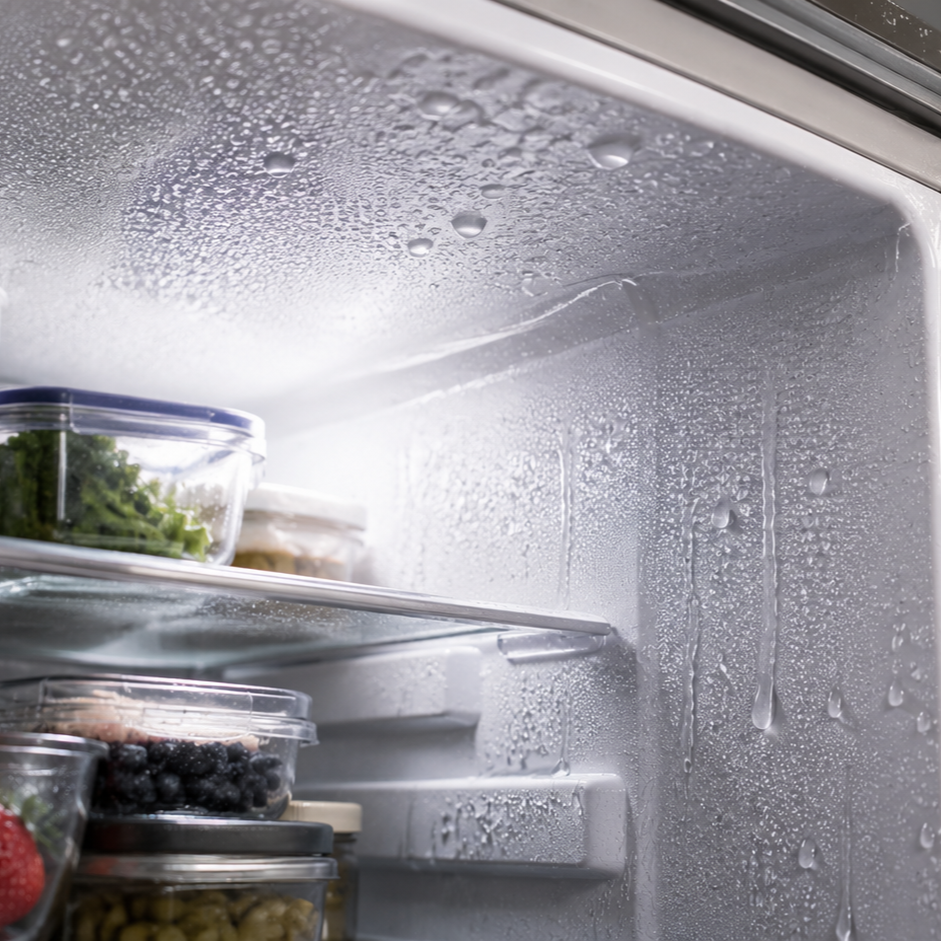
Opening the refrigerator to find the interior walls beaded with moisture, or water collecting inside, is a common complaint — especially in a humid climate. The "sweating" is condensation, and it happens for the same reason a cold drink sweats on a summer day: warm, humid air meeting a cold surface. Understanding how that humid air is getting inside points you to the cause and the fix.
Why Condensation Forms
A refrigerator keeps its interior cold, while the air in your kitchen is warmer and holds moisture. When warm, humid air enters a cold fridge, the moisture condenses into water droplets on the cold surfaces — the walls, shelves, and food. This is normal physics: cold surface plus humid air equals condensation. So, a sweating refrigerator isn't producing water out of nowhere; humid air is getting inside, and the cold is wringing moisture out of it. The question is how that humid air is getting in, because in a properly sealed, properly used fridge, it shouldn't be a problem.
Cause One: A Bad Door Seal
The most common cause is a problem with the door gasket — the rubber seal around the door that's supposed to keep outside air out. Over time, gaskets wear out, crack, dry out, or get dirty and sticky, so they no longer seal tightly. A gasket that doesn't seal lets a steady stream of warm, humid air leak into the fridge, which then condenses inside. A dirty gasket can also fail to seal even if it's not worn. So if your fridge is sweating, the door seal is the first thing to check — a worn or dirty gasket is a leading reason humid air gets in.
Cause Two: How the Door Is Used
Sometimes the issue is simply how the door is being used. Opening the refrigerator door frequently or for long periods lets in a lot of warm, humid air, which condenses inside. Leaving the door ajar — even slightly — allows a continuous flow of humid air. And a door that doesn't close fully because the fridge is overpacked (items blocking it), the shelves or drawers aren't seated, or the appliance isn't level, can leave a gap that lets air in. These usage and closing issues are common, easily overlooked causes of interior sweating.
| Cause | Why it causes sweating |
|---|---|
| Worn or dirty door gasket | Lets humid air leak in past the seal |
| Door opened often or left ajar | Repeated/continuous humid air entry |
| Door not closing fully | Overpacking or unlevel fridge leaves a gap |
| High room humidity | More moisture available to condense |
| Blocked defrost drain | Water backs up and collects inside |
Cause Three: High Humidity and Drainage
Environmental and drainage factors contribute too. Very high humidity in the room means there's more moisture in any air that gets inside, so condensation forms more readily, which is why sweating is more common in humid climates and humid times of year. Separately, a refrigerator has a defrost drain that carries away water from the defrost cycle; if that drain gets clogged, water can back up and collect inside the fridge, which may appear as sweating or pooling. So, persistent water inside, especially pooling at the bottom, can point to a blocked defrost drain rather than just condensation. High humidity increases the overall moisture load, making any sealing issue appear sooner.
How to Stop It
Because the causes are identifiable, the fixes usually are too. Check and clean the door gasket, and replace it if it's worn, cracked, or no longer sealing — restoring a tight seal stops humid air from leaking in. Make sure the door closes fully and isn't blocked by overpacked items, that shelves and drawers are seated, and that the fridge is level. Avoid leaving the door open or ajar. If water is pooling at the bottom, the defrost drain may need clearing. In a humid climate, keeping the seal tight and the door closed matters even more, since there's more moisture to condense. If the sweating persists after these steps, or you suspect a drainage or component issue, an appliance professional can diagnose it.
TIP: Test your door seal with a dollar bill. Close the door on it and try to pull it out — if it slides out easily, the gasket isn't sealing tightly there and is letting humid air in. Doing this around the door finds weak spots in the seal, which is the most common cause of a fridge sweating inside.
Why It's Worth Addressing
Interior sweating is more than a nuisance. Moisture can promote mold and mildew growth inside the fridge, affect food, and, if it's from a failing seal, also make the fridge work harder and use more energy to maintain temperature against leaking warm air. Persistent water from a drainage issue can lead to pooling and leaks. So, addressing the cause — most often by resealing the door and managing how it's used — both stop condensation and keep the refrigerator running efficiently and hygienically. Catching a worn gasket early prevents the extra energy use and moisture problems that come with a poor seal.
Frequently Asked Questions
Because warm, humid air is getting into the cold interior and condensing into moisture, like a cold glass sweating on a hot day. The most common cause is a worn or dirty door gasket that isn't sealing tightly, letting humid air leak in. Other causes include opening the door too often or leaving it ajar, a door that won't close fully, high room humidity, or a blocked defrost drain.
Check the gasket for wear, cracks, dryness, or dirt that keeps it from sealing. A simple test is to close the door on a dollar bill and try to pull it out—if it slides out easily, the seal isn't tight there. Doing this around the door helps identify weak spots. A worn or dirty gasket that lets humid air in is the leading cause of interior sweating.
Yes. In high humidity, there's more moisture in the air that enters the fridge, so condensation forms more readily on the cold interior surfaces. This is why sweating is more common in humid climates and humid seasons. High humidity increases the overall moisture load, making any sealing or door-usage issues show up faster due to condensation inside.
Water pooling at the bottom can point to a blocked defrost drain. The refrigerator's defrost drain carries away water from the defrost cycle, and if it clogs, water backs up and collects inside, which can look like sweating or pooling. Persistent water at the bottom, rather than droplets on the walls, often indicates a drainage issue rather than simple condensation.
It can, especially if the sweating is caused by a failing door seal. A gasket that lets warm, humid air leak in forces the refrigerator to work harder and use more energy to maintain its temperature. Fixing the seal not only stops the condensation but also helps the appliance run more efficiently and may reduce energy costs.
Clean and inspect the door gasket, replacing it if it's worn or no longer seals properly. Make sure the door closes fully, isn't blocked by overpacked items, the shelves are seated correctly, and the fridge is level. Avoid leaving the door open for long periods. If water pools at the bottom, clear the defrost drain. In humid climates, maintaining a tight seal is especially important.