
Why Does My Front-Load Washer Smell Musty? The Real Cause
You pull open the washer door to load a towel and the smell hits before you even see inside: damp, sour, a little like a gym bag left zipped for a week. The clothes that just finished a cycle don't smell clean; they smell like the machine itself. If this only started recently, or if it keeps coming back no matter how often you wipe things down, the cause usually isn't neglect. It's the way a front-load washer is designed to hold water, seal air, and run on far less rinse volume than the top-loader it replaced.
The Design Trade-Off Behind The Smell
A front-load washer earns its water and energy savings by using a fraction of the water a top-loader does and by tumbling clothes through a shallow pool instead of submerging them in a full tub. That's efficient, but it also means less water moves through the machine to physically flush away soap film, fabric softener residue, and the lint and skin cells that come off every load. A top-loader with an open drum and a deep fill essentially rinses itself with volume. A front-loader has to be cleaned on purpose, because the design doesn't do that flushing for you.
The other half of the trade-off is the seal. To keep water from splashing out of a drum that spins on a horizontal axis, front-loaders use an airtight rubber gasket around the door opening. That seal is exactly what keeps your floor dry during a spin cycle, and it's also what keeps warm, damp air trapped inside the drum once the cycle ends and the door swings shut. A sealed, humid chamber sitting at room temperature is close to a textbook setup for mold and bacterial growth, and that is precisely what a closed washer becomes between loads.
Where The Smell Actually Lives
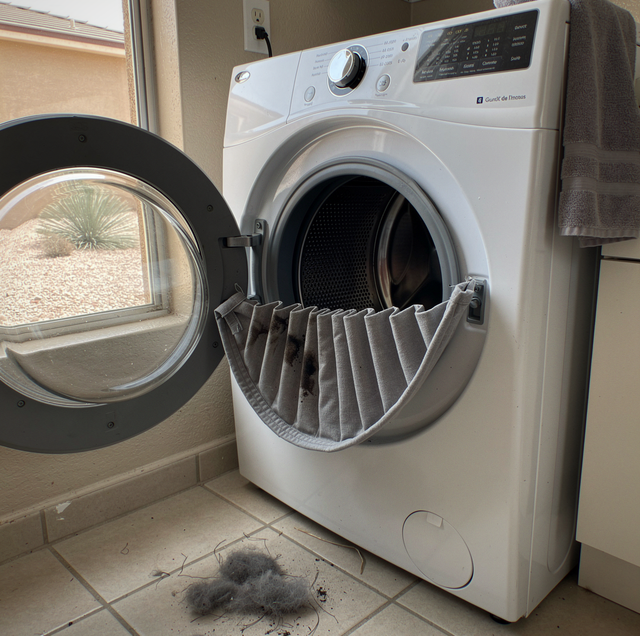
The gasket itself is usually the strongest source. Look at its accordion-style folds, and you'll see why: those pleats exist to let the door flex and seal, but they also form small pockets that trap water, hair, lint, and coins after every wash. Wipe the front of the gasket; it looks fine. The buildup collects in the folds, so you can't see it without pulling the rubber back. Left damp, that trapped material grows a thin, slippery layer of mold and bacteria, a biofilm, that produces the sour, musty compounds you're smelling. It isn't dirt in the way a stain is dirt; it's a living film that keeps regenerating as long as the gasket stays wet and dark.
Detergent and fabric softener add fuel to that film. Both products are designed to leave a residue behind, softener especially, since a slick coating on fibers is exactly how it works. In a full-water top-load wash, most of that residue rinses away. In a low-water front-load cycle, a portion clings to the drum wall, the gasket, and the detergent dispenser tray instead of washing out. Over time, it forms a waxy coating that mold happily feeds on, and the dispenser drawer, with its narrow channels and standing puddles between uses, often smells worse than the drum itself once you pull it out.
There's a second reservoir most people never think to check: the drain path. Front-loaders route wash water through a pump and, on most models, a small filter behind an access panel at the base of the machine. That filter exists to catch coins, buttons, and hair before they reach the pump, and it holds a pocket of standing water even when the machine looks empty. A filter that hasn't been opened in months is sitting on stagnant water and trapped lint, which breeds the same odor as the gasket, just lower and further out of sight.
Habits That Make It Worse
Closing the washer door right after the last spin cycle is the single biggest amplifier. Think of it like sealing a damp towel inside a lunch box: the moisture has nowhere to go, so it just sits there feeding whatever is already growing on the surfaces around it. A washer left shut between loads never gets the chance to dry out, so each new cycle adds moisture on top of moisture that never left.
Washing everything on cold compounds the residue problem, since cold water is gentler on the biofilm and residue than a hot cycle would be. Cold washing saves energy and protects colors, which is exactly why it's the default on most machines, but it also means the drum rarely reaches a temperature that would naturally slow the buildup. And skipping the manufacturer's recommended cleaning cycle, the "tub clean" or "sanitize" setting most front-loaders have, lets everything above keep layering month after month instead of getting flushed out on a schedule.
Clearing The Smell For Good
Start with the gasket. Pull the rubber fold open by hand all the way around the door opening and wipe out whatever has collected there with a damp cloth, then a dry one. Do this after a few loads, not just once, since the film regrows quickly on a surface that's still humid.
Pull the detergent and softener dispenser drawer completely out (most slide free with a firm tug or a release tab), then rinse it in the sink, scrubbing the channels with an old toothbrush to break up any built-up residue. Let it air-dry outside the machine before sliding it back in.
Run the washer's dedicated cleaning cycle with either a washing-machine cleaner tablet or a plain mix of hot water, white vinegar, and baking soda. This cycle runs hotter and longer than a normal wash specifically to loosen and flush the film that a regular load never touches. Do this on a monthly rhythm rather than waiting for the smell to return.
Open the drain filter access panel, set a shallow pan underneath, and slowly twist the filter cap loose so the trapped water drains rather than flooding the floor. Clear out any lint, hair, or small debris caught in the trap, rinse the filter itself, and reseat it firmly.
Once the machine is clean, change the habit that let it get that way. Leave the door and the dispenser drawer cracked open between loads so air can actually circulate and dry the gasket and drum. Wipe the gasket dry with a towel after the final load of the day, especially if you tend to run laundry in the evening and won't touch the machine again until the next morning.
When Cleaning Doesn't Fix It
If you've done the gasket, the drawer, a cleaning cycle, and the drain filter, and the smell is still there within a few days, the problem has likely moved past surface buildup. A gasket that has torn or degraded enough to hold a permanent stain won't come clean no matter how well you scrub it, since the rubber itself has absorbed the film; at that point it needs to be replaced rather than cleaned again. A drain pump that isn't fully emptying the tub every cycle leaves a pool of stagnant water in the sump behind the scenes, which keeps breeding odor regardless of how often you clean the visible parts. Either of those is a hands-on repair rather than a habit fix, and it's worth having a technician confirm which one you're dealing with before you keep buying cleaning tablets for a problem cleaning can't reach.
Frequently Asked Questions
The smell itself won't damage fabric, but it does transfer onto clothing, and towels pick it up worse than most other laundry because their thick loops of fiber trap odor-causing moisture the same way the gasket does. If towels keep smelling sour again within a day of drying, that's usually the washer talking, not the dryer.
Skip it. Chlorine bleach is harsh on the rubber compound most gaskets are made from, and repeated use dries and cracks it faster than plain cleaning ever would, which trades a smell problem for a leak problem down the road. An oxygen-based cleaner or the vinegar-and-baking-soda approach handles the biofilm without attacking the seal.
Once a month is the general rhythm most manufacturers build into the machine's settings, but a household doing frequent towel loads, workout clothes, or diaper laundry generates more residue and organic material per week, so running the cleaning cycle every two to three weeks keeps ahead of it instead of playing catch-up.
Some machines route water through an internal recirculation line between the dispenser and the drum that isn't reachable from the drawer or the gasket at all. If the smell returns quickly after a full cleaning, that hidden line is a common cause, and it typically requires a technician to access it rather than a home cleaning routine.
Not entirely, but older agitator-style top-loaders rarely develop it, since their open drum and higher water volume flush residue out and let air reach every surface after the cycle ends. Newer high-efficiency top-loaders without an agitator use less water than front-loaders, so they can develop the same gasket and residue buildup, just typically more slowly because the drum sits open to the air rather than sealed shut.
Yes, and faster than most people expect. A load left sitting in a warm, sealed drum can start to smell sour in as little as a few hours, since wet fabric packed together holds heat and moisture, accelerating bacterial growth beyond what the gasket does on its own. If you catch a forgotten load within an hour or two, an extra rinse cycle usually clears it before it sets in.
Schedule a washer inspection — get the gasket, drain path, and internal hoses checked so the musty smell doesn't keep coming back. Freedom Appliance of Tampa Bay serves Tampa Bay and Riverview. Call (813) 302-7672.