Why a Garbage Disposal Smells and Drains Slowly at Once
You rinse a plate at the sink, and before the water even clears the drain, a sour, rotten smell drifts up from the disposal. The bowl fills a little faster than it should, sitting an inch above the strainer before it slowly gives way. You run the tap longer, hoping it clears on its own, but the smell only gets stronger with each cycle.
That combination, odor and a slow drain together, almost always traces to a small number of causes inside the disposal itself, not the rest of your kitchen plumbing. This piece walks through what is actually happening in the chamber, what separates ordinary buildup from a failing part, and the single sign that separates a cleaning job from a repair call.
How Odor Builds Up Inside a Disposal
Most of what you smell from a disposal is not the disposal itself; it is whatever got ground small enough to lodge somewhere the water rinse never quite reaches. The underside of the rubber splash guard and the space between the grind ring and the housing wall both trap small amounts of food debris every time you run the unit. None of that debris is visible once you close the lid, so it sits, wet and warm, in a chamber that never fully dries between uses.
That trapped debris breaks down the same way anything organic does once oxygen and moisture reach it: bacteria feed on it and release sulfur compounds as a byproduct, which is what actually produces the rotten-egg or sour-milk smell you notice. A disposal that runs daily on light rinsing, without ever grinding anything substantial, gives that film more time to sit undisturbed than one that regularly processes real scraps and gets flushed with a hard blast of water afterward. Grinding only light rinse water most days keeps that film sitting far longer between real cleanings.
Why a Slow Drain Often Comes with the Smell
The two symptoms usually share a single cause because they occur in the same place. The debris responsible for the smell often collects right where the disposal empties into the drain line, at a bend that narrows the opening enough to slow the flow without stopping it outright. Water finds a path around the buildup, so the sink still drains, just more slowly than it did a few weeks ago, and the smell gets stronger as more material collects in the same spot.
You can get a rough read on where the blockage sits by running the disposal empty for a few seconds with the water on. If the water clears quickly once the motor is off, the restriction is most likely inside the disposal or right at its outlet. If it drains just as slowly with the disposal off as it does with it running, the debris has likely moved past the unit and into the trap or the branch line beneath the sink, a plumbing problem instead of a disposal one.
What Burns When the Disposal Hums but Won't Spin?
A disposal that hums but does not spin is not the same problem as one that smells. Humming means the motor is receiving power and trying to turn, but something inside the grind chamber- a bone fragment, a stubborn fruit pit, a piece of glass- is wedged against the impeller plate and physically blocking it. The motor keeps drawing current into a stalled load, and that current has to go somewhere.
Most disposals include a small thermal overload protector that cuts power when the stalled motor gets too hot, which is when a faint electrical or rubber-like burning smell often appears alongside the hum. That smell is coming from the motor windings and the protector itself working as designed, not from food waste, and it is a different signal than the sour odor covered above.
Never reach into a disposal to free a jam by hand; the impeller can restart without warning and cause serious cuts, so shut off the breaker and call a licensed appliance technician.
The reset button on the underside of the unit will sometimes restore power once the motor cools, only for the hum to return the moment something is still lodged against the impeller. A hum that keeps returning after a reset points to a jam that needs to be cleared before the motor runs again, not a switch that needs to be pressed a second time.
Hard Water and Grease Buildup Make It Worse
Hard water leaves a mineral film behind every time it passes through the disposal, and that film builds up fastest on the splash guard baffle and the underside of the sink flange, the same surfaces prone to trapping food debris. Once mineral scale roughens those surfaces, food particles catch on them more easily than they would on a smooth surface, so the buildup that causes the smell grows faster in a hard-water kitchen than it would otherwise.
Grease and cooking oil add a second layer to the same problem. Warm grease goes down the drain as a liquid, then cools and re-solidifies against the mineral scale and food residue already sitting in the line, narrowing the opening a little more with every load of dishes. High humidity slows how quickly the grease film dries out between uses, so a kitchen that runs its disposal often in a humid climate tends to build residue faster than use alone would suggest.
How to Tell a Simple Clog from a Failing Seal or Motor
Ordinary odor and buildup respond to cleaning: the smell fades within a day or two of clearing the visible debris and running the disposal with cold water and a citrus peel or a handful of ice, and the drain speed improves at the same time. A problem that keeps returning within days despite regular cleaning, or that never fully clears no matter how often you rinse the chamber, is behaving differently than ordinary buildup and points toward something mechanical instead.
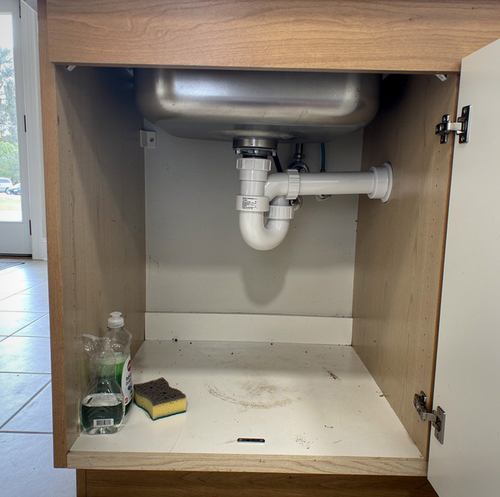
A failing seal shows up as water where it should not be: a damp ring on the cabinet floor beneath the disposal, or a drip where the unit bolts to the sink flange. A failing motor shows up as sound and behavior rather than moisture: a hum with no spin, a grinding note that was not there before, a burning smell layered on top of the usual odor, or a unit that trips its own thermal protector more than once in the same day during ordinary use. Track either pattern over a few days rather than judging it from one bad afternoon, and the part that is actually failing becomes clear before a technician ever opens the unit.
None of this requires taking the disposal apart to check. A flashlight aimed under the sink after running water for a minute usually shows a fresh drip if a seal is the issue, and a hand held flat against the mounting bracket, not the unit itself, shows whether it is running hotter than it should.
When the Smell and Slow Drain Mean It Is Time to Call a Technician
Cleaning solves most odor and slow-drain complaints inside a week. A repair call becomes the right next step once the smell keeps returning after cleaning, the drain gets slower rather than better over several uses, or the hum-without-spin pattern from earlier shows up alongside either one, since cleaning alone will not reach the actual cause at that point. Waiting rarely makes it any simpler.
If you want one detail to watch before deciding whether to call, it is how fast standing water disappears after the disposal runs for ten seconds with the tap on. Water that clears within a few seconds indicates ordinary buildup that can be cleaned again. Water that still sits an inch deep a full minute later, with or without a smell, is the single sign worth acting on.
Frequently Asked Questions
A citrus-and-ice rinse or a store-bought foaming cleaner freshens the part you can see, but it rarely reaches debris packed under your own splash guard or near the impeller. If the smell returns within a day, the debris is still there, and your disposal needs a deeper cleaning than a rinse can provide.
If the smell returns quickly, the residue may sit past the disposal, in the trap or branch line under your sink, where your chamber cleaning never reaches. Hard water scale there gives new debris more surface to cling to, so it rebuilds even faster than you expect.
A hum with no smell in your disposal usually means a jam without decomposition, since the debris has not broken down. It is worth treating as a jam, not routine noise: flipping the switch while it hums keeps the motor drawing current into a stall, and if you let that repeat, you risk tripping the built-in overload protector or damaging an unseen winding.
Your disposal does not have blades to sharpen; it uses two blunt impeller plates that swing outward and pulverize food against a stationary grind ring. Ice will not sharpen anything, but the frozen chips knock loose debris stuck to those plates, which is why you may notice less odor after running a batch through your unit.
Yes, if your dishwasher drains through the same disposal connection, which is how most installations work. A restriction inside the disposal backs up the shared line, so the dishwasher may not drain fully and can leave standing water in its tub after a cycle. It is usually worth checking whenever you notice your own kitchen sink draining slowly, too.
There is no fixed number of minutes because the thermal overload protector is designed to cut power before the windings overheat enough to fail, and it will do that repeatedly if you keep resetting it and flipping your switch back on. Real damage comes from how many times you force that cycle, not how long one attempt runs. Each stall-and-cutoff event stresses the winding insulation a little more, and a motor reset and restarted a dozen times against the same jam sits closer to failing than one you shut off after the first hum.
Stop guessing about the smell and the slow drain in your kitchen sink — schedule a disposal inspection so a technician can open the unit, clear the cause, and confirm the drain runs at full speed again. Freedom Appliance of Tampa Bay serves Tampa Bay and Riverview. Call (813) 302-7672.