
Dryer Smells Like Burning? What To Check and When To Stop
You open the dryer door mid-cycle because the smell finally pulled you across the room, and there it is: a warm, faintly acrid odor that has no business coming off a load of towels. Maybe it fades once the drum stops. Maybe it does not. Either way, a burning smell from a dryer is one of the few laundry-room symptoms that deserve an immediate answer rather than a "keep an eye on it."
Most of the time the cause is mechanical, not electrical fire in progress, but a few of the possible causes are real safety risks, and you cannot tell which one you have just by sniffing the air. What follows is how to distinguish a manageable lint problem from a stuck object, a slipping belt, or a bearing quietly grinding itself apart, plus a clear line for when to stop running the machine entirely.
Lint Buildup Is the Most Common Cause and the Most Dangerous
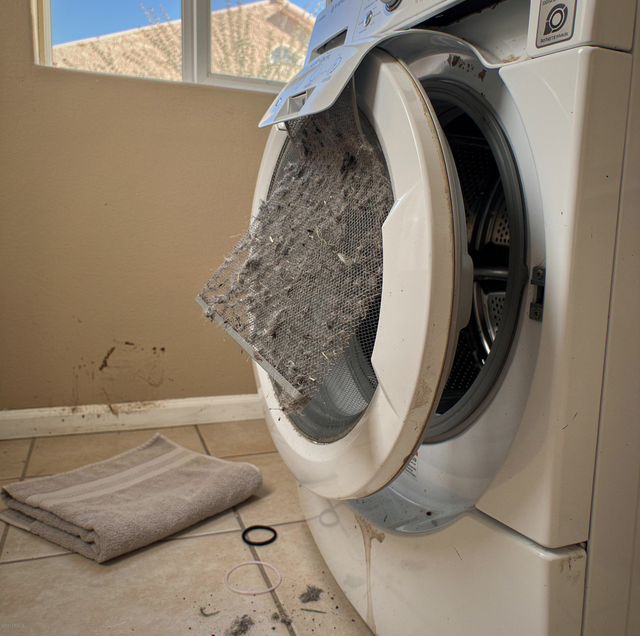
Every load sheds fibers, and the lint screen only catches a portion of them. The rest travels past the trap in small amounts and settles wherever airflow slows down: inside the exhaust duct, around the blower housing, and directly on or near the heating element itself. A layer of lint sitting against a heating element that regularly reaches several hundred degrees does not need a spark to ignite. It just needs enough buildup, enough heat, and enough time, and that combination is the leading cause of home dryer fires reported by fire-safety agencies every year.
The smell this produces is a specific one: dusty, warm, a little like scorched cotton or paper, and it usually gets stronger as the cycle runs longer and the cabinet heats up. Airflow that used to move a fresh, clean smell through the exhaust hood now pushes that heated air back across packed lint sitting closer to the element than it should. Humid climates make this worse, because damp lint clings to duct walls and the lint screen instead of blowing straight through, so buildup accumulates faster than it would in a drier setting, and heavy year-round use gives it more loads per month to build on.
A Slipping or Worn Drive Belt Creates Its Own Heat
The drum does not spin on its own. A rubber belt loops around the outside of the drum and around a pulley driven by the motor, and that belt has to stay taut to transfer motion cleanly. As the belt ages, it stretches, glazes, or cracks, and instead of gripping the drum, it begins to slip against the same few inches of surface over and over.
That friction generates real heat, and rubber rubbing against metal at a fixed point smells distinctly different from lint: sharper, more like burning rubber than burning dust, sometimes with a faint chemical edge. You may also notice the drum turning more slowly than normal, a squealing or rhythmic thumping sound as the worn belt catches, or the dryer stalling partway through a cycle because the motor is straining against a belt that no longer transfers power as it should. A slipping belt is a wear item, not a wiring fault, but left running, it can eventually snap, overheat nearby components, or scorch the section of drum it has been dragging against.
Small Objects Melting Against the Drum or Heating Element
Pockets get emptied incompletely more often than anyone likes to admit. A plastic button, a coin, a crayon left in a kid's jacket, a small toy, a hair clip, a bit of loose foam padding from a bra or shoe insert: any of these can work its way out of a pocket during the tumble and land somewhere it should not be, wedged near the heating element, caught in the blower wheel, or pinned between the drum and the felt seal at the back.
Once that object touches a surface hot enough to melt plastic or rubber, the smell turns sharp and unmistakably chemical, closer to a burning trash smell than anything associated with fabric or lint. You may also hear an odd rattling, clicking, or grinding noise as the object gets caught and released with each rotation, and sometimes you will find a small melted residue or scorch mark on the drum interior once the load finishes. This is one of the few causes where checking your own pocket habits going forward, and running an empty test cycle to listen for the noise, tells you most of what you need before a technician ever opens the cabinet.
A Failing Motor Bearing Can Smell Like Burning Too
Less common but worth naming: the drive motor itself runs on bearings, and like any bearing under constant use, they wear down over years of cycles. A bearing running dry, without enough lubrication left to reduce friction, generates heat right at the motor housing, and that heat can produce a warm, slightly metallic or electrical-adjacent smell that is easy to mistake for a wiring problem.
A failing motor bearing usually comes paired with sound: a persistent hum that gets louder over weeks, a grinding note that was not there before, or a motor that seems to labor and run hotter to the touch than it used to on the cabinet exterior near the back. Because this failure lives inside a sealed motor housing wired to line voltage, it is not something to open up and inspect casually. It is one of the clearer signals that the smell has moved from "something in the lint path" to "an internal component wearing out."
What Is Safe to Check Yourself
A few checks are within reach for most households and take only a few minutes. Start with the lint screen: pull it out, and if it looks even slightly coated, wash it with warm water and dish soap, since a waxy fabric softener film can trap heat against the mesh even when it looks clean at a glance. Next, unplug the dryer or shut off the gas supply, then pull it away from the wall far enough to look at the exhaust duct connection at the back. Disconnect it if you can reach the clamp safely, and look inside with a flashlight for a visible lint mat. A handheld vacuum with a hose attachment or a flexible lint brush can clear an accessible straight run.
Outside the house, find the exterior vent hood and check that the flap opens freely and that you can feel a strong push of warm air with the dryer running a load. A weak trickle at the hood, paired with a burning-dust smell, is a strong sign the duct itself is packed with lint somewhere between the two ends you can reach. If clearing the visible sections and the exterior hood does not resolve the smell, or if the duct run is long, bends through a wall cavity, or you cannot access enough of it to be confident it is clear, that is the point to stop DIYing the vent and bring in someone with the right equipment to inspect the full run.
When to Stop Using the Dryer Immediately
Some signs do not belong on a "check it later" list. Stop the cycle, unplug the dryer or shut off its breaker, and do not run it again until it has been inspected if you notice any of the following: visible smoke or a smell that is sharp and chemical rather than dusty, scorch marks or discoloration anywhere on the drum interior, back panel, or cabinet exterior, a burning smell paired with grinding, squealing, or thumping that suggests a belt or bearing under real strain, the dryer tripping a breaker or the smell getting noticeably stronger partway through a load, or any smell you cannot clearly link to lint after checking the trap and the accessible duct sections yourself.
None of those symptoms are worth troubleshooting further on your own. A gas dryer adds another layer, since a burning smell paired with any hint of gas odor means shutting off the supply valve and calling a technician before doing anything else. Electrical components, the drive motor, the heating element circuit, and anything inside the gas burner assembly all carry real risk if handled without the right training and equipment, and a lint-packed duct that has been feeding heat for months is itself a fire-safety matter, not just a repair inconvenience. When the cause turns out to be something beyond the trap and the accessible duct, a technician who can pull the drum, inspect the belt, motor, and element, and run a full duct-clearing pass is the safer and faster path than continuing to guess.
Frequently Asked Questions
Lint buildup around a heating element or a duct restriction causes the cabinet to heat up before the smell becomes noticeable, so it often takes 10 or 15 minutes of running before enough heat builds up against the trapped material to produce an odor. A belt or bearing issue behaves the same way, since friction heat accumulates gradually as the motor keeps turning rather than appearing the instant the cycle starts.
Yes, and it is worth ruling out. An overloaded circuit, a loose wire connection at the outlet, or a worn power cord can produce a warm, slightly electrical smell near the back of the machine that has nothing to do with the drum or vent. If the smell seems to come from the wall outlet or cord rather than the cabinet, unplug the dryer and have an electrician check the outlet and circuit before assuming the problem is inside the appliance.
A brand-new heating element can give off a mild, dusty smell during its first few cycles as manufacturing residue and protective coatings burn off, and that typically fades within two or three loads. A smell that persists beyond the first several cycles, or that appears on a dryer that has been running fine for months or years, points to one of the causes above rather than normal break-in.
A faint, dusty smell tied to a lint screen you have not washed in a while is usually low risk to address on your next load after you clean the screen and check the duct. A smell that is sharp, chemical, or accompanied by any unusual sound is not something to push through with another load, since the risk of a small issue becoming a real fire hazard increases the longer heat sits against trapped lint or a stressed component.
Burning lint smells dusty and a little like scorched paper or cotton, while melted plastic or rubber carries a sharper, more chemical edge closer to a burning trash smell. If you catch that sharper smell, check the drum interior for a scorch mark or bit of residue once the dryer has cooled, and empty every pocket thoroughly before the next load.
Washing the lint screen regularly removes the fabric-softener film that traps heat and prevents most of the buildup right at the trap, but it does not clear lint that has already settled deeper in the duct or around the heating element from past loads. A clean screen paired with a duct that has not been checked in a year or more can still produce a burning smell, since the screen only catches what passes through it going forward.
Schedule a dryer safety inspection — get the vent, belt, and heating element checked before a burning smell turns into a bigger problem. Freedom Appliance of Tampa Bay serves Tampa Bay and Riverview. Call (813) 302-7672.