
Repair or Replace a 10-Year-Old Refrigerator
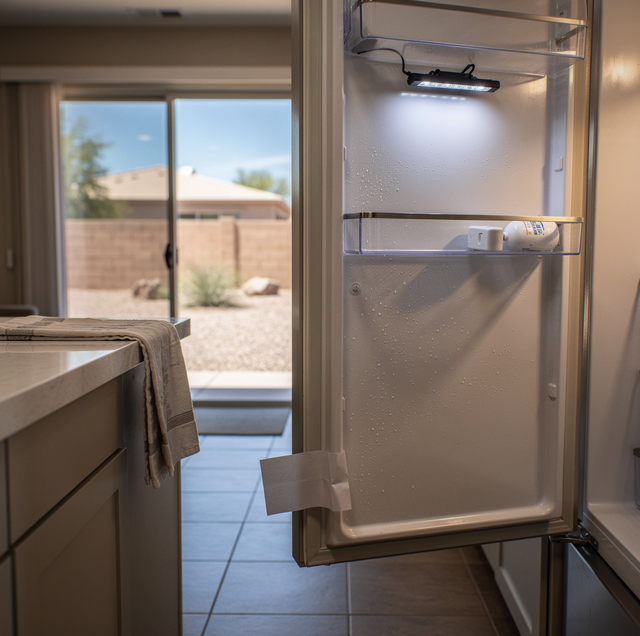
A refrigerator at the ten-year mark sits in a real gray zone: not so old that repair is automatically pointless, not so new that replacement is obviously premature. A second service call in the same year often forces the decision: a technician returns to look at the compressor again, and there's a choice between scheduling another repair and shopping for a new unit. That choice should not hinge on emotion or on how frustrating the timing feels. It comes down to a handful of concrete, checkable facts about the specific unit in front of you.
The Failure Pattern Tells You More Than the Age Does
A single failed part on an otherwise healthy refrigerator is a different situation than a unit that keeps breaking in new ways. If this is the first real repair the fridge has needed in ten years, that is actually a sign of a well-built machine that has simply worn out one component, and fixing that one component is a reasonable way to get more service life out of it. If, on the other hand, you have replaced the start relay two years ago, a door gasket last year, and now the compressor is struggling, that combination signals a pattern of systems reaching the end of their working life in sequence, not a single isolated failure, and that pattern is the strongest piece of evidence you have.
Refrigerators are built from several independent systems: the sealed refrigeration system (compressor, condenser, evaporator, and the tubing connecting them), the electrical and control system (thermostat, control board, fans, defrost timer), and the cabinet hardware (gaskets, hinges, shelving, ice maker components). Each of these systems tends to fail on its own separate timeline. When only one has failed, you are replacing a part. When two or three have failed within a short stretch of each other, the machine as a whole is telling you it is winding down, even though the other systems have not visibly failed yet. A technician who has actually opened the unit and looked at the wiring, the coils, and the compressor mounts is in a far better position to tell you which of these two situations you are in than a guess based on the fridge's age alone.
Parts Availability Shapes What Repair Even Means
The second factor is whether the part your unit needs is still something a technician can reasonably obtain. Refrigerator manufacturers typically keep replacement parts in production for a period after a model is discontinued, but that window is not infinite, and it varies a lot by manufacturer and by which specific part failed. Compressors, control boards, and door assemblies tend to have better long-term parts support than a specific plastic ice maker housing used only on one model year.
If your model is still common and its parts are easy to source, a repair is usually a quick, uncomplicated job to schedule and complete. If your technician tells you the exact control board your unit needs was discontinued and the only supply is used or aftermarket parts of uncertain reliability, that changes the calculation. A repair built around a part that may fail again soon, or that took weeks to track down this time, is a weaker bet than a repair using a part that is still in normal supply. Ask directly: is this part still in production, or are we looking at an aftermarket substitute? The answer matters as much as the diagnosis itself.
Remaining Compressor and Seal Life Sets the Ceiling
Every sealed refrigeration system has a rough working life, and it depends heavily on how hard the compressor has been run and how well the door seals have held up. A compressor that cycles constantly because the door gaskets have gone soft and are letting cold air leak out works harder over its life than one paired with a tight seal. That extra strain shortens the amount of life left in it, even if the compressor itself has never failed.
This is where a repair decision has to look past the part that just broke and consider what is still functioning nearby. If a technician is replacing a start relay or a fan motor on a unit whose compressor still runs quiet and whose door seals still hold a firm grip on a piece of paper slid between them and the cabinet, that compressor likely has meaningful life left, and the repair is a sound one. If the compressor itself is the part that failed, or if it is running unusually loud, cycling far more often than it should, or struggling to hold temperature even after a repair, you are closer to the ceiling of what that sealed system has left to give. A compressor swap is possible on many units, but it is a significant repair, and it only makes sense when the rest of the cabinet, gaskets, and electronics are in good shape to support the additional years that swap is meant to buy.
TIP: A firm door seal check takes ten seconds. Close the door on a piece of paper, then pull. If it slides out with no resistance, the gasket is compromised, and the compressor is working overtime as a result.
Newer Units Run More Efficiently by Design, Not by Marketing
A refrigerator built ten or more years ago uses an older generation of compressor technology, insulation, and defrost control than one built today. Many newer units use variable-speed compressors that adjust their output to match the actual cooling load, rather than cycling fully on and off as older single-speed compressors do. That difference in how the compressor runs has real mechanical consequences: less start-up strain, more consistent internal temperature, and less wear concentrated at the moments when the compressor kicks on.
Insulation foam formulations and door seal designs have also improved, meaning a new unit holds its set temperature with less compressor runtime for the same ambient conditions. It is a description of how the machine works: a newer compressor and better insulation mean the refrigeration system spends less of its life running under load. That translates into different wear patterns over the unit's service life and, for a household that keeps the unit in a warm kitchen or an unconditioned garage, into more thermal headroom to keep food safely cold.
Reliability Trends Favor Newer Electronics, Not Necessarily Newer Everything
It is a fair question to ask whether newer means better across the board, and the honest answer is mixed. Some manufacturers have refined surge protection and circuit design in recent board generations, which matters given how vulnerable exposed electronics are to power fluctuations. Boards vary widely by manufacturer, though, and a technician who sees the same models repeatedly is the better source on which ones actually hold up.
At the same time, a well-maintained ten-year-old compressor, with its simpler mechanical design and fewer electronic dependencies, can be just as dependable as a newer one, provided it has not been run past its working life by a failing gasket or an overworked condenser coil. The reliability trend favors newer control electronics specifically and an intact compressor and seal system regardless of the exact model year. This is why a competent inspection of the specific unit carries far more weight than the model year printed on a sticker inside the door.
Repair vs. Replace at a Glance
| Factor | Repair Makes Sense When | Replace Makes Sense When | Check This |
|---|---|---|---|
| Failure pattern | This is the first major failure in years of reliable service | Two or more major systems (compressor, control board, gaskets) have failed within a short span | Pull the repair history: one ticket over several years versus multiple tickets in the last 12-18 months |
| Parts availability | The needed part is still in normal production and supply | The part is discontinued and only available as an uncertain aftermarket substitute | Look up the part using the model and serial number on the plate inside the door; "special order, no ETA" is a red flag |
| Remaining compressor/seal life | Compressor runs quiet, cycles normally, and door seals hold firm | Compressor is loud, short-cycling, or struggling to hold temperature even after service | Rest a hand on the compressor housing after a full cycle; it should be warm, not too hot to touch |
| Efficiency mechanism | Current compressor and insulation still perform close to original spec | Compressor cycles constantly due to aging seals or design, running under load far more than intended | Track the temperature with a fridge thermometer for a day; swings beyond 5 degrees point to strain |
| Electronics reliability | Control board and wiring show no history of surge damage | Repeated control board failures suggest ongoing exposure to power fluctuations the unit cannot handle | Note whether the breaker or outlet the fridge is plugged into has tripped more than once |
What a Trustworthy Inspection Actually Checks
Because this decision comes down to specifics that only a hands-on look can confirm, the most useful step is to have someone open the unit and take a look. A proper inspection covers the compressor's sound and cycling behavior, the condition of the door gaskets, whether the condenser coils are clean or caked with dust and debris, the wiring and control board for any sign of surge damage, and whether the part that failed is one your model can still be repaired with using currently produced parts. Refrigerant handling and any work inside the sealed system or on the electrical components should always be left to a trained technician, both because it requires specialized tools and because mishandling can create a real safety hazard.
WARNING: Never attempt to open the sealed refrigeration system or work on internal wiring and control boards yourself. These repairs involve pressurized refrigerant and live electrical components and should be handled only by a trained technician.
A ten-year-old refrigerator is not automatically a lost cause, nor is it automatically worth saving. What matters is the specific pattern in front of you: one clean failure on a machine that has otherwise held up, or a string of failures that add up to a bigger picture. Getting an honest look at the compressor, seals, wiring, and parts situation for your exact model turns a guess into a decision you can actually stand behind.
Frequently Asked Questions
A healthy compressor makes a low, steady hum that starts and stops in a predictable rhythm as the unit cycles on and off to maintain temperature. A rattling, buzzing, or clicking sound that repeats every few seconds, or a hum that never stops because the compressor is running continuously, usually means it is straining rather than cycling normally, and that pattern is worth having checked before it fails outright.
Not necessarily. A warm spot in the freezer is often caused by a blocked air vent inside the unit, a fan that has stopped turning, or frost buildup around the evaporator coil restricting airflow, none of which involve the compressor at all. These issues are usually easy for a technician to isolate during a diagnostic visit before assuming the compressor itself is the source.
Yes, coil cleaning is one of the few refrigerator maintenance tasks safe for a homeowner to do. Unplug the unit, pull it away from the wall, and vacuum the coils on the back or underneath with a brush attachment a couple of times a year. Dust and pet hair trapped on the coils make the compressor work harder to release heat, which adds unnecessary strain over time.
A gasket's working life depends heavily on how often the door is opened and closed and how much moisture it is exposed to, but a gasket that has gone soft, cracked, or lost its ability to grip is a repairable part on its own and does not require replacing the whole refrigerator. Gasket replacement is a relatively small, self-contained repair that can meaningfully reduce the strain on an otherwise healthy compressor.
Some increase in run time during warm stretches is expected because the compressor has more heat to remove to hold the same internal temperature. A unit that never cycles off at all, or one that runs constantly even on a mild day, has moved past that normal range. That pattern usually points to a seal, airflow, or refrigerant issue rather than expected seasonal behavior.
Compressor oil settles at the bottom of the compressor when a refrigerator is upright, but tipping the unit onto its side allows that oil to migrate into the refrigerant lines. Running the compressor before the oil has had time to drain back can starve it of lubrication, causing it to fail almost immediately. As a general guideline, a refrigerator that has been moved on its side should stand upright for roughly as long as it spent tilted, and often at least 24 hours, before it is plugged back in.
Schedule a refrigerator diagnostic — get a straight answer on your compressor, seals, and parts availability before deciding what's next. Freedom Appliance of Tampa Bay serves Tampa Bay and Riverview. Call (813) 302-7672.