
Why Your Fridge Won't Cool but the Freezer Still Works
QUICK ANSWER:In most refrigerators, one set of coils in the freezer cools both compartments, and a fan blows that cold air up into the fridge. So when the freezer stays cold but the fridge turns warm, the cooling system is usually fine — the cold air just isn't reaching the fridge. The common culprits are a frosted-over coil from a failed defrost system, a dead evaporator fan, or a blocked vent or damper. A few are DIY checks; a sealed-system problem is a pro job.
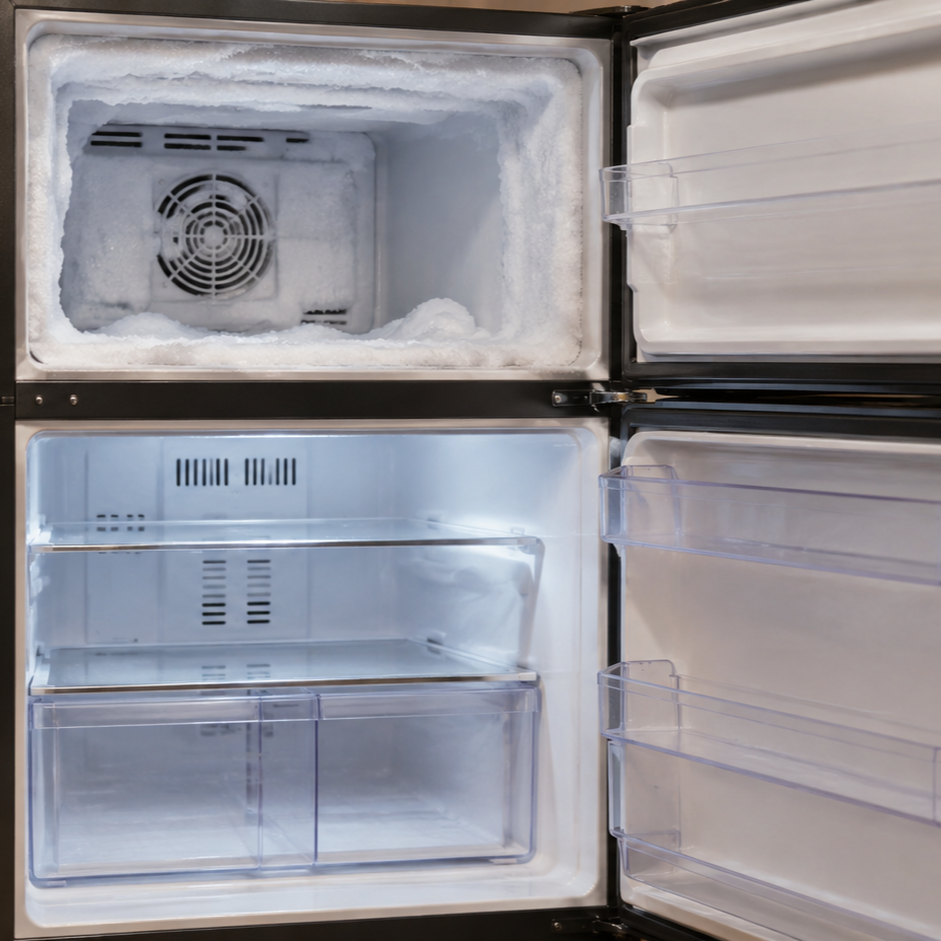
You open the freezer and everything's rock solid, then open the fridge below it, and the milk is lukewarm. It feels like half the appliance quit, which is confusing — how can one half freeze while the other half fails? The answer is in how a refrigerator actually makes cold, and once you understand that, the warm-fridge mystery usually points to a short list of fixable causes.
One Cooling System, Two Compartments
Here's the part most people don't realize: most refrigerators don't cool the fridge and freezer separately. A single set of coils — the evaporator, tucked behind a panel in the freezer — makes all the cold. A small fan then blows that cold air through a vent into the fresh-food compartment below. The freezer is cold because it's where the cold is made; the fridge depends entirely on air being moved to it.
That's why "freezer fine, fridge warm" is almost never a dead compressor or empty refrigerant. If the system had truly failed, the freezer wouldn't be cold either. Instead, something is preventing the cold air from reaching the fridge — and that something is usually one of three things. (A few high-end models use two separate evaporators, in which case a warm fridge can be its own cooling fault, but the single-evaporator design is by far the most common.)
The Three Usual Culprits
| What's happening | Likely cause | Sign to look for |
|---|---|---|
| Coil iced over, airflow choked | Failed defrost system | Frost caked behind the freezer back panel |
| Cold air not being pushed | Evaporator fan motor failed | No fan sound, or a loud/clicking fan |
| Vent path blocked | Stuck damper or packed-in food | Fridge vents covered; freezer overpacked |
The most common is a failed defrost system. A refrigerator automatically melts frost off its coil several times a day using a small heater; when the defrost heater, thermostat, or control fails, frost keeps building until it encases the coil in ice. Air can't pass through a block of ice, so the fridge slowly warms even though the freezer is still freezing. The giveaway is a thick layer of frost when you pull the panel off the back inside the freezer.
Second is the evaporator fan. If the fan that pushes cold air into the fridge dies or ices up, the cold simply stays in the freezer. Sometimes you'll notice the fridge goes quiet, or the fan gets loud and grinds before it fails. Third is airflow getting blocked the simple way — a damper that's stuck shut, or food packed against the vents so the cold air can't circulate.
What You Can Check Yourself
Start with the easy, no-tools steps. Make sure food isn't blocking the vents inside either compartment — the cold air needs a clear path. Vacuum the condenser coils underneath or behind the fridge, which should be cleaned every two to three months in a home with pets or dust, since dirty coils make the whole system struggle. Listen for the evaporator fan when the fridge is running; silence may indicate a failed fan.
The most useful home test for a suspected defrost failure is to empty the appliance, unplug it, and let it sit with the doors open for at least 24 hours so all the ice melts, then plug it back in. If it cools normally afterward and then warms up again a day or two later, you've confirmed a defrost problem that needs a real repair. Where it crosses into pro territory is the sealed system — the compressor, refrigerant, and related parts. Refrigerant runs in a closed loop and doesn't get "used up," so a low charge means a leak, and that diagnosis and repair belong to a technician.
TIP:A refrigerator should sit around 37°F and the freezer at 0°F, and food stays safe only up to about 40°F. If your fridge has been warm, treat perishables with caution: discard anything that's been above 40°F for more than two hours (one hour if the kitchen is over 90°F). When in doubt, throw it out.
Why Humidity Makes It Worse Here
Along the Gulf Coast, the humid air adds its own pressure to all of this. Every time the door opens, warm, moist air pours in, and that moisture condenses and freezes faster on a struggling coil — so a marginal defrost system tips into a full ice-up sooner here than it would in a dry climate. Humidity also means more sweating and dripping inside the box, and a worn door gasket that lets humid air leak in makes everything worse. Keeping the gaskets sealing tightly and minimizing how long the doors hang open does more in Tampa Bay than most people expect. If the basics check out and the fridge still won't hold temperature, that's the time to call in a refrigerator repair before the food bills add up.
Frequently Asked Questions
Because in most refrigerators, one coil in the freezer makes all the cold, and a fan blows it into the fridge. If the freezer is cold, the cooling system works — the cold air just isn't reaching the fridge. The usual reasons are a frosted-over coil from a failed defrost system, a dead evaporator fan, or a blocked vent or damper.
Some causes, yes. You can clear blocked vents, vacuum the condenser coils, check that the fan is running, and run a 24-hour unplugged defrost test. If it cools after defrosting and warms again later, that's a defrost-system repair. Sealed-system issues — compressor or refrigerant — aren't DIY and need a technician.
After a repair or a manual defrost, give the refrigerator up to 24 hours to fully stabilize at the desired temperature. Don't judge it by the first hour. If it reaches and holds around 37°F, then drifts warm again a day or two later, the underlying problem hasn't been fixed, and it needs service.
Food is safe up to about 40°F. Discard perishables — meat, dairy, eggs, leftovers — that have been above 40°F for more than two hours, or one hour if the room is over 90°F. A closed fridge keeps food safe for roughly four hours during an outage, but a fridge that's been warm for a while is a different situation; when in doubt, throw it out.
Frost that keeps returning usually means the automatic defrost system has failed — the heater or its controls aren't melting the coil's frost on schedule, so it accumulates. In a humid climate, frequent door openings and a worn gasket accelerate it. A little frost is normal; a thick, returning layer that blocks airflow is a repair.
It's possible but less common than a defrost or fan problem, and it's not something that just runs low — refrigerant is in a sealed loop, so a low charge means a leak. That's a job for a technician to find and fix, not a DIY recharge. Rule out the frost, fan, and airflow causes first, since those are far more frequent.
The Cold Is There — It Just Isn't Moving
A warm fridge over a cold freezer is rarely a dead appliance. The cold is still being made; it's the path between the two compartments that's blocked, usually by ice on the coil, a stalled fan, or a covered vent. Run the simple checks, do the 24-hour defrost test, and mind the food-safety clock while you do. If it still won't hold temperature, the fix is a service call — and in this humidity, the sooner the better.
Fridge warm while the freezer's still freezing? — Get the defrost system, fan, and airflow diagnosed and fixed before your groceries pay the price. Freedom Appliance of Tampa Bay serves Tampa Bay and Riverview. Call (813) 302-7672.